
Smartwatch Manufacturers (2026): Buyer’s Guide & Directory
A practical guide to shortlist the right partner —
understand brands vs OEM/ODM factories, evaluate suppliers, and avoid common sourcing mistakes.
Need an OEM/ODM manufacturing partner (not just a brand list)?
If you’re building a private-label smartwatch or a project-ready wearable, the fastest way forward is to confirm the workflow first:
device → phone/gateway → your server → your dashboard/alerts.
We provide wearable hardware plus protocol/SDK documentation and integration guidance. The platform/app/backend is usually built and owned by your team or your system integrator (unless it becomes a paid custom project).
To recommend the right model for a pilot, please confirm:
• Use case + who wears it
• Connectivity preference (BLE / LoRaWAN / Cellular)
• Pilot quantity + target timeline
Or scroll down to the evaluation checklist below.
This page is a buyer’s guide + directory. The brand list below is for market reference only — it’s NOT an OEM/ODM factory list. If you’re sourcing a manufacturing partner, start from the evaluation checklist first.
Table of Contents
How to Evaluate a Smartwatch Manufacturer (OEM/ODM Checklist)
Don’t start from a “top 10” list. Start from your workflow and integration ownership.
A reliable OEM/ODM partner should be clear on: what’s standard vs customized, what data you can access, and how you validate the pilot before scaling.
Minimum info to shortlist a supplier (keep it short)
• Use case + who wears it (and where: indoor/outdoor/both)
• Desired data flow (device → receiver → server → dashboard)
• Connectivity preference (BLE / LoRaWAN / cellular)
• Raw data vs processed metrics (any downlink/OTA/commands?)
• Rough pilot quantity + timeline
Category fit
Have they shipped a similar product type and use case? Ask for reference models and what’s standard vs custom — avoid suppliers learning on your project.
Firmware & data access
Confirm how you get data (protocol/SDK), and whether you need raw signals or processed metrics. Define what you must access from day one.
Sensors & measurement validity
Ask when readings are reliable (resting vs moving) and what affects accuracy. Firmware differences across models matter — confirm before you build on it.
Connectivity & data workflow
Lock the data path: device → phone/gateway → server → dashboard. Confirm who owns decoding/integration and whether downlink/OTA/commands are needed.
Industrial design & tooling (ID/MD)
Reuse an existing housing or build new ID/mold? Tooling decisions impact timeline, waterproofing, antenna layout, and manufacturing risk.
DFM, MOQ & lead time
Separate samples vs pilot vs mass production. Don’t accept fixed promises before config, approvals, and component availability are confirmed.
Quality & reliability
Check QC flow (incoming/in-process/outgoing), test coverage, failure handling, and traceability. Ask how firmware updates are controlled in production.
Compliance plan
Target market determines certification needs. Don’t assume compliance — verify early based on the exact model/config and destination market.
What a smartwatch manufacturer typically provides (and what’s not included)
Before comparing suppliers, align on scope. Most sourcing issues come from unclear responsibilities — not from hardware.
Typically included:
• Wearable hardware (reference models + configurable options)
• Protocol/SDK documents for integration (data access and command scope)
• Samples and pilot support (to validate your workflow)
• Manufacturing QA and production delivery (after specs are locked)
Usually NOT included by default (unless it becomes a paid custom project):
• Building/hosting your full dashboard/app/backend
• Deploying or operating gateways / network servers for you
• Guaranteed accuracy/battery/latency without confirmed real site conditions
• Final unit pricing / fixed lead time before model + config + quantity are confirmed
A quick responsibility map (recommended):
• Device & protocol/SDK: supplier
• Data flow design + decoding + dashboard/app: your team or your integrator
• Pilot success metric (what “works” means): both sides agree before scaling
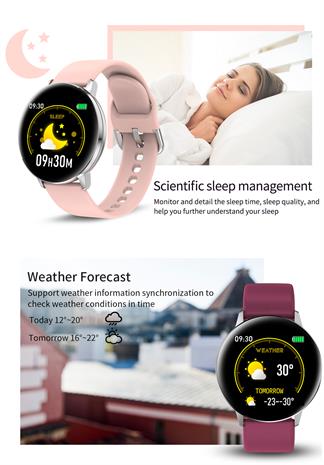
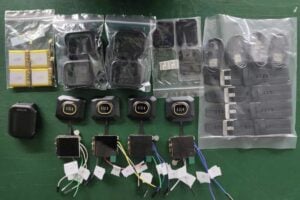
If you’re sourcing an OEM/ODM partner for private label production, see our factory view here:
https://ismarch.com/smartwatch-manufacturer/
Smartwatch categories that change OEM/ODM requirements
Not all “smartwatches” are built the same way. Your product category determined firmware scope, the way of access data, connection solutions, and cost structure
Pick your category first, then shortlist suppliers who’ve shipped similar projects.
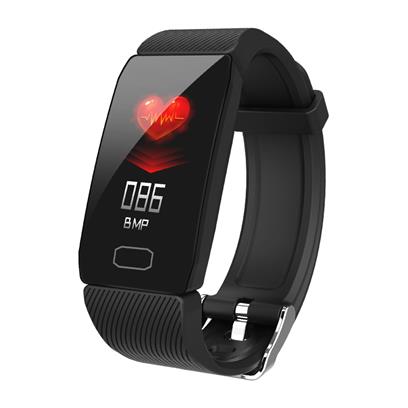
1) Consumer fitness & lifestyle
Usually app experience and sensor stability matter most.
Confirm what data you can access (processed metrics vs raw signals).
Avoid vague promises — define your target use conditions early.
2) Kids / campus / family safety
Battery life, reliability, and simple UX come first.
Connectivity and alert workflow must be clear (device → receiver → server → app).
Confirm how SOS/alerts are handled on the platform side.
3) Rugged / outdoor / sports training
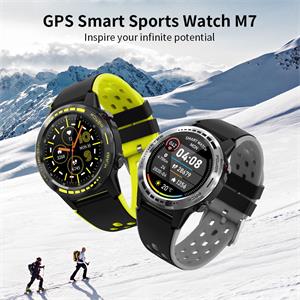
GNSS performance, sensor accuracy under movement, and enclosure design matter.
Confirm what affects readings (movement, wearing position, environment).
Define what “success” means in a pilot test before scaling.
4) Enterprise / industrial wearables
Durability, connectivity options, and integration ownership are key.
Data workflow and decoding responsibility must be confirmed before pilot.
Expect more “project-grade” requirements than consumer products.
5) Healthcare-style projects (regulated/claims-sensitive)
Certification and claims control become the biggest risk driver.
Do not market medical claims unless compliance is confirmed.
Define which metrics are “reference only” vs “decision-grade”.
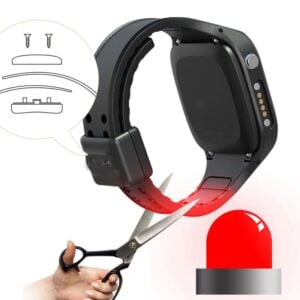
6) Custom / special markets (anti-tamper, restricted environments, etc.)
These projects often require scope-controlled customization (firmware/behavior/protocol).
Start with standard samples to validate workflow first, then lock customization level.
Expect a clearer requirements document before any engineering evaluation.
Quick self-check (answer these before contacting suppliers):
• Who wears it, where is it used (indoor/outdoor/both)?
• What’s the data flow (device → receiver → server → dashboard)?
• Preferred connectivity (BLE / LoRaWAN / cellular)?
• Raw data or processed metrics? Any downlink/OTA/commands?
• Pilot quantity + target timeline?
Smartwatch Market Scope (2026): what buyers actually mean
The smartwatch market is not one single market. In 2026, “smartwatch manufacturer” usually points to two different buyer intents:
1) Consumer brand view
People want to know major smartwatch brands and what a “good product” looks like across segments (premium, fitness, Android-focused, rugged, etc.).
2) OEM/ODM sourcing view
People are sourcing a manufacturing partner to build a product for their own brand or project. In this case, the key questions are completely different: firmware scope, data access, connectivity, documentation, compliance plan, pilot validation, and production quality.
Where the real complexity is (2026):
• Software + integration ownership: device → phone/gateway → server → dashboard (who builds what?)
• Data requirements: raw signals vs processed metrics (and what you can access)
• Connectivity choices: BLE-only vs long-range options (project dependent)
• Compliance + claims control: especially for healthcare-style projects
• Pilot-first approach: validate the workflow before scaling or customizing
If you’re sourcing an OEM/ODM partner, don’t start from a “top 10” list. Start from the checklist:
– Confirm your workflow and integration ownership
– Use the Supplier Scorecard to shortlist partners
– Send the RFP template to get consistent, comparable replies
3.2 Healthcare & Fitness market
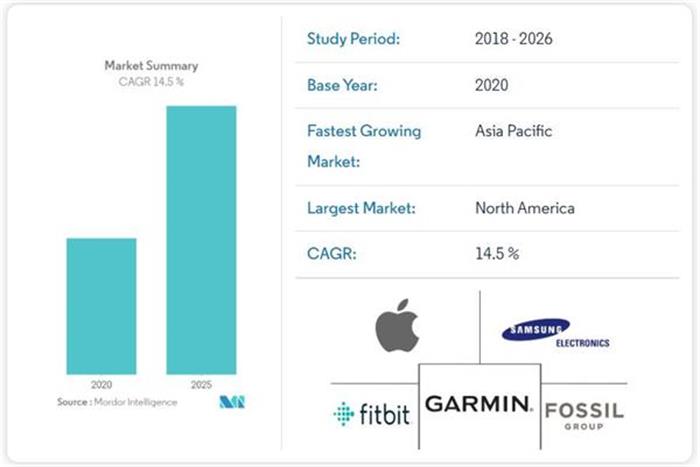
Healthcare and fitness will take a significant share of the market.
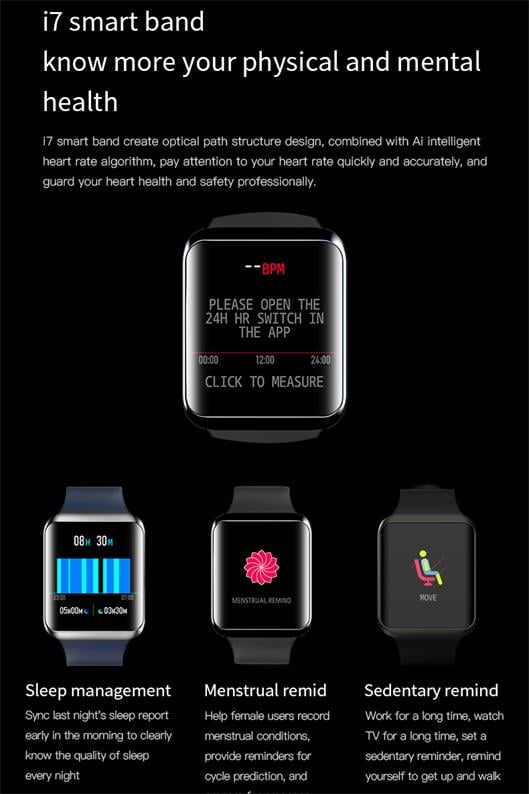
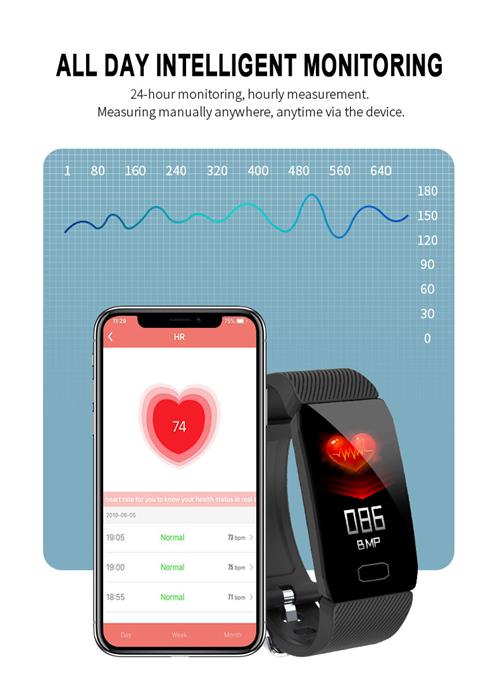
Health monitoring has been one of the most critical features of wearable technology. It provides fitness enthusiasts with complete and essential health data to help them understand the data during exercise and reminds them to pay attention to their health by providing insight into the patient’s condition. In particular, COVID-19 people are more concerned about their health, which has led to an increase in smartwatch demand. Since each smartwatch has a tracking sensor, smartwatches’ growth has increased dramatically due to its complete functions to record vital health data.
The emergence of smartwatches saves users time and resources and helps doctors present some complex and important health information. The data allow healthcare professionals to solve complex problems, such as the effects of a new drug, or remotely understand a patient’s physical characteristics, make an online diagnosis, or monitor a patient’s recovery from surgery continuously.
Smartwatch inside have an accelerometer (G-sensor) to detect tremors and seizures, especially for the disease like epilepsy. When attacks happen, a very effective and in-time treatment is an important part of guaranteeing the smallest damage to human health. What’s more, smartwatch can be used to alert emergency contacts such as family, doctors, friends about seizures happen, which could be very helpful for patients’ recovery.
Some Top smartwatch manufacturers are already working on clinical verification to approve if the software and algorithm can detect actual health conditions, like ECG and atrial fibrillation or blood pressure or blood glucose, which will help grow the market.
3.3 IoT Smart Wearable market
In addition to smartwatches, in addition to health monitoring, it is an excellent help for people. Through IoT, technology can be connected to any object and reflect its wide range of uses.
Smartwatches could be used in large factories to set up safety alerts for workers and remind them to work safely. It can also be used to manage the orderly conduct of employees’ daily work, whether everyone completes the work within the prescribed time, whether there is any laziness? You can build secure prison systems that monitor people in real-time; Smartwatches can also send work instructions to remind employees to deal with urgent matters.
Enterprise wearables solutions are:
- The perfect fit for the retail market.
- Making inventory management faster and easier.
- Enabling silent calls and notifications to improve efficiency while freeing employees’ hands for other tasks.
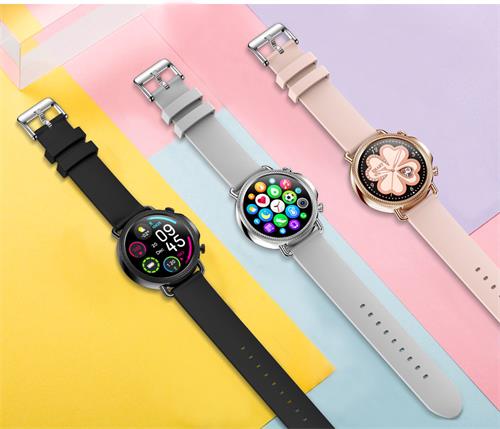
3.4 Consumer market
As governments spend on smart city development and facilitate the development of the Internet of Things, various applications are expected to increase the demand for smartwatches.
Increasing demand for smart watches with the newest features is the main reason that is expected to actuate the growth of the worldwide smartwatch market. In addition, more and more end consumers adopt remote Home healthcare services, which also leads to increased demand for watches.
It can help share health data with professionals or online contracted doctors and alarm emergency services when needed. Home healthcare also increases the demand for professional smartwatches.
What are your application scenarios with the smartwatch? Share your idea.
Major Smartwatch Brands (What people often mean by “smartwatch manufacturer”)
Quick note: the brands below are for market reference only. They are not OEM/ODM factories.
If you’re looking for a smartwatch manufacturing partner (OEM/ODM) to build your own product, jump to “How to Evaluate a Smartwatch Manufacturer” and use the Supplier Scorecard + RFP template on this page.
Search intent is mixed for “smartwatch manufacturer”. Some people want to know the leading consumer brands. Others are trying to source an OEM/ODM partner to build a product for their own brand or project.
To avoid confusion, this section lists major brands for reference. It helps you understand what “good products” look like in different segments (premium, fitness, Android-focused, rugged, etc.).
But if your real goal is manufacturing (OEM/ODM), you should evaluate very different things: firmware scope, sensor data access, connectivity, documentation, compliance plan, and how the supplier supports samples → pilot → scale.
Use this page as a decision guide: learn the criteria first, then shortlist partners. Don’t start from a “top 10” list.
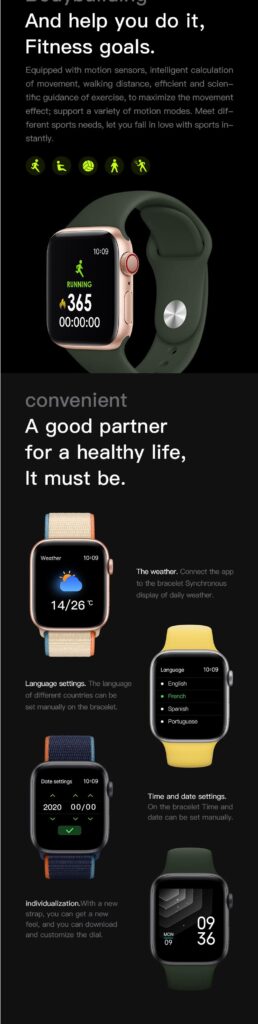

4.1 Apple
https://www.apple.com/watch/
Known for: premium ecosystem-driven smartwatches, strong health features, and tight iPhone integration.
Best for: premium consumer positioning and iOS-first user bases.
What to check: device compatibility (iOS requirements), regional availability, and long-term software support expectations.
4.2 Samsung
https://www.samsung.com/us/watches/
Known for: mainstream Android smartwatches with broad features and strong hardware design.
Best for: Android-first markets and buyers who want a well-known consumer brand.
What to check: Android ecosystem fit, app/service dependencies, and region-specific model availability.

4.3 Lenovo
https://www.lenovo.com/
Known for: a wide consumer electronics portfolio and occasional smartwatch offerings.
Best for: buyers exploring broad consumer electronics ecosystems.
What to check: current smartwatch lineup (can vary by cycle), software ecosystem, and support/updates in your target region.

4.4 Garmin
https://www.garmin.com/en-US/
Known for: GPS-focused sports and outdoor wearables with strong tracking features.
Best for: sports, outdoor, and training-heavy use cases.
What to check: positioning accuracy expectations, map/service dependencies, and feature differences across product lines.

4.5 Fitbit
https://www.fitbit.com/
Known for: fitness tracking and health-focused wearables with strong consumer branding.
Best for: lifestyle fitness and wellness-oriented product expectations.
What to check: platform/account requirements, app ecosystem fit, and availability/support in your target market.

4.6 LG
https://www.lg.com/us/mobile
LG is a global electronics brand. Wearable availability can vary by product cycle and region.
Best for: market reference only (brand-level comparison).
What to check: the latest lineup, OS compatibility, and long-term software support before making decisions.
4.7 Huawei
https://consumer.huawei.com/en/wearables/
Known for: strong consumer wearables presence in many markets, with a broad product lineup.
Best for: buyers comparing major consumer brand options, especially outside the US ecosystem.
What to check: service/app ecosystem requirements, regional availability, and any platform restrictions in your target market.

4.8 FOSSIL
https://www.fossil.com/en-us/smartwatches/smartwatches/
Known for: fashion-led wearables and watch-style designs across multiple product generations.
Best for: design-first positioning where aesthetics matter.
What to check: current model availability, OS/platform support, and how well features match your target users.

4.9 Polar Electro
https://www.polar.com/us-en/products
Known for: training and sports-focused wearables with strong fitness tracking heritage.
Best for: professional training, coaching, and sports performance scenarios.
What to check: analytics/software ecosystem, sensor/training metrics fit, and region-specific product support.
OEM/ODM Manufacturing Partner Spotlight (not a consumer brand)

4.10 iSmarch
https://www.ismarch.com
iSmarch (OEM/ODM) builds project-ready smartwatches and smart bands for private label and enterprise/IoT use cases.
What we provide:
– Wearable hardware + protocol/SDK documentation for integration
– Multiple connectivity options (BLE / LoRaWAN / cellular, model dependent)
– Sample → pilot → scale support, with scope-controlled customization
What we typically don’t provide by default:
– A full hosted dashboard/app/backend (usually owned by the customer or integrator)
Best next step:
Share your workflow (device → receiver → server → dashboard), preferred connectivity, and pilot quantity — then we’ll recommend the closest reference model and the fastest path to start.
Factory/OEM/ODM details: https://ismarch.com/smartwatch-manufacturer/
OEM vs ODM vs Full Custom (and the safest way to start)
Smartwatch OEM
These terms are often mixed up. Here’s the practical difference:
• OEM (private label):
Use an existing hardware platform and produce under your brand. Branding and small configuration changes are common.
• ODM (platform-based customization):
Start from an existing platform, then modify firmware/behavior/protocol within a controlled scope to match your workflow.
• Full custom:
New industrial design, new PCB or major hardware changes. This has the highest cost/risk and should only start after a validated pilot and locked requirements.
What kind of OEM customization work could you do with your smartwatch project?
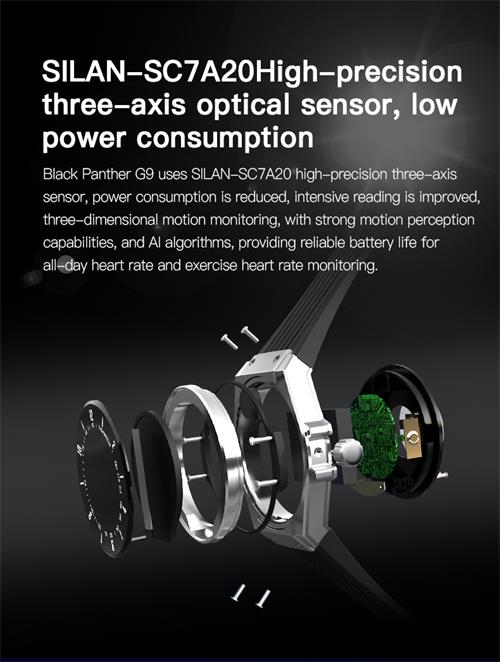
Different color of a watch case, you even could choose other raw material or outlook treatment based on your needs;
Strap raw material smartwatch standard strap is silicone, but you could customize leather, woven strap, mesh, steel strap with different color, or can do some logo or image print on straps;
Your App customization, how to display the data, or App name. Or we could send you our App SDK, then you do your App integration into smartwatch;
OEM (private label) — fastest path to pilot
OEM is best when you want a fast pilot with minimum risk.
Typical OEM scope includes:
• Logo/branding, strap/color options
• Packaging adjustments
• Feature toggles within existing firmware options (model dependent)
Best practice: start with 1–2 samples to validate the workflow first, then scale to a small pilot before mass production discussions.
ODM (platform-based) — scope-controlled customization
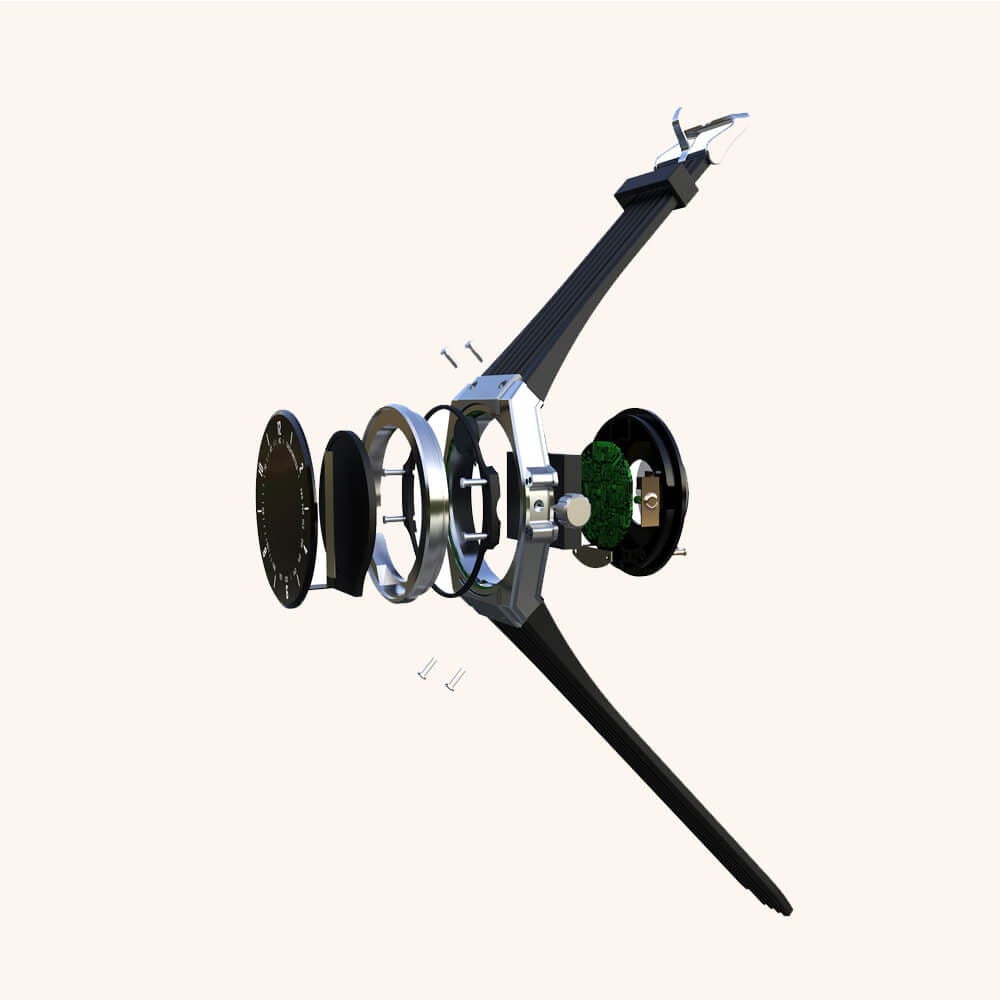
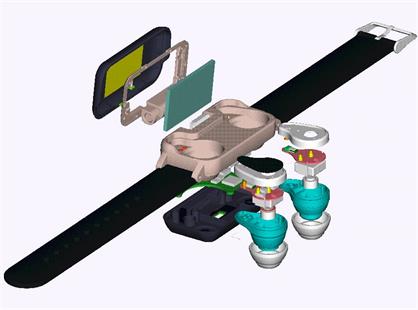
ODM is for projects that need controlled changes beyond branding, such as:
• Firmware behavior tweaks (sampling, triggers, alerts)
• Protocol adjustments (within a defined scope)
• Integration-friendly outputs for your backend/dashboard
Before any ODM evaluation, confirm:
• Data flow (device → receiver → server → dashboard)
• Who owns decoding/integration
• Raw data vs processed metrics
• Any downlink/OTA/commands needed
How to choose: OEM vs ODM vs Full Custom
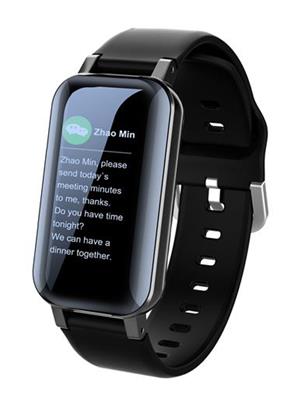
Choose based on risk and speed:
• Choose OEM if:
You want the fastest validation and can accept an existing platform.
• Choose ODM if:
Your workflow needs specific firmware/protocol behaviors, but you still want to reuse an existing platform.
• Choose Full custom if:
You must change enclosure/PCB/antennas/sensors significantly — and you already validated the pilot and locked the requirement document.
Recommended path: sample → pilot → customization level
To avoid expensive mistakes, we recommend:
Level 0 — Standard product (validate workflow fastest)
Level 1 — Light customization (branding / small toggles)
Level 2 — Medium customization (firmware/protocol tweaks within scope)
Level 3 — Deep customization (PCB/enclosure/mold)
Best next step is usually 1–2 samples for a quick pilot. After the workflow is proven, we can lock the customization level and discuss the project plan.
How to find a reliable smartwatch manufacturer (7-step sourcing process)
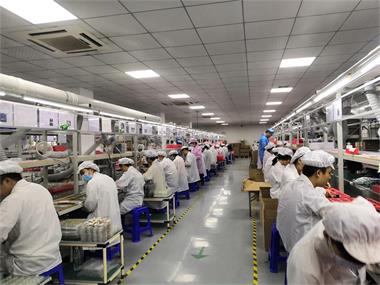
Use this 7-step process to source a reliable smartwatch manufacturer without wasting weeks on back-and-forth:
Step 1 — Define your category + success metric
Decide your product category and what “success” means in a pilot (battery target, workflow, key features).
Step 2 — Lock the workflow
Write the data flow in one line: device → phone/gateway → server → dashboard/alerts. Confirm who owns decoding and integration.
Step 3 — Decide connectivity + data needs
Choose BLE / LoRaWAN / cellular (project dependent). Confirm whether you need raw sensor signals or processed metrics.
Step 4 — Shortlist 3–5 suppliers using the scorecard
Score category fit, firmware/data access, connectivity, compliance plan, and QC process — don’t rely on a “top 10” list.
Step 5 — Send one consistent RFP
Use the same RFP template to all suppliers so replies are comparable (model recommendation + what’s standard vs custom).
Step 6 — Run samples → pilot
Start with 1–2 samples, then a small pilot. Validate real workflow before discussing deep customization.
Step 7 — Only then discuss customization level and scaling
Lock the customization level (OEM / ODM / full custom), confirm scope, then move to production planning.
About iSmarch (and when we’re a good fit)
Leading Smartwatch Manufacturer in China
With iSmarch 9+ years of smartwatch know-how in different applications, we offer consumer smartwatch for large online stores, physical stores, big watch brands, and IoT smart wearable solutions for healthcare, nursing home, smart campus, workflow, prison, etc
iSmarch is one of the early companies that concentrate on private tooling smartwatch & fitness band and use our know how to apply strict quality control processes, from regular standard testing to App, software, PCBA board, battery testing.
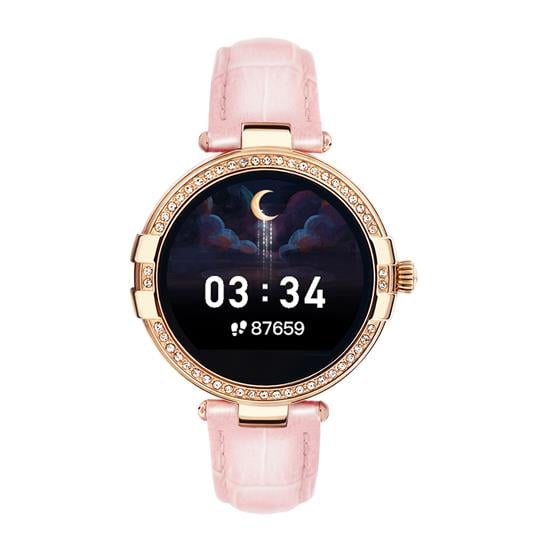
Product & Engineer Team
Wide Smartwatch Product Range
We adopt world-class advanced technology for production and R&D engineering. We produce a complete range of smartwatches, fitness bands, smart bracelets, GPS for outdoor sports, SOS watch, smartwatch for adults, kids smartwatch, fashion smartwatch for ladies.
We also have a professional smartwatch for a vertical application like a nursing home, Telehealth, remote monitoring for vital signs. We sell a solution to our customers.
Strong R&D Engineer Team
We have 50+ Smart Wearable industry professional engineers in our team. Our engineer team’s abilities cover hardware design and make your idea from a drawing paper into reality. But also software development, including algorithm, App, and firmware development.
iSmarch team is constantly providing end-to-end smartwatch solutions. So welcome any OEM & ODM smartwatch project. This is what we mainly do for our customers.
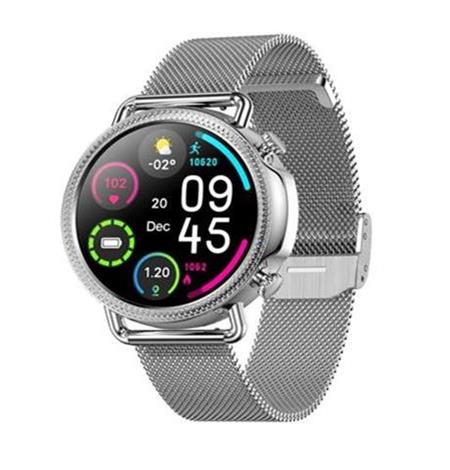
Factory & MOQ
Advanced manufacturing process & quality control
With over nine years of experience in the smartwatch industry, we produce products based on a modern manufacturing process based on an ERP system, making all production under management. That is why we keep continuous stable quality, fast delivery time for our customers. This is one of the critical factors to be successful in the smartwatch industry.
Flexible MOQ + 48 hours stock ready for shipment
If you want to add a smartwatch into your product line to test the market, you will prefer to start with a small order and more SKU. And we fully understand what your concern is because we already help many watch/consumer electronics/gift companies from 0 to be the top 3 smartwatch providers in their market.
We will keep enough stock for a 48hours shipment for most of our main selling items after receiving your payment. And our MOQ is only 100pcs for each item after your sample testing, but this is a neutral smartwatch and package.
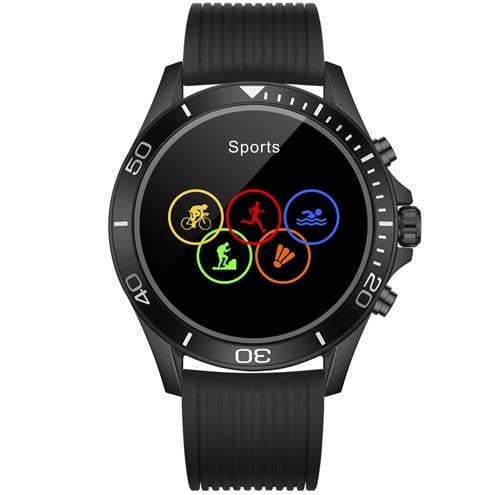
Add Value
Extra Free Service
iSmarch has a well-trained marketing team that can help you create marketing documents and materials for your brand such as high-resolution product picturers, 3D photo, display for physical store or exhibition, marketing competition analysis and more…
We benefits from our customers’ success, so we are keen to provide effective marketing documents to support your smartwatches promotion. All our additional extra services aim to provide a cost-effective, complete, all-in-one solution for your company.
On the other hand, we have many years experience in smartwatches, so we understand all your questions may encounter, we will have a series video and PDF FAQ to guide you when you have any questions.
Mini Directory (Buyer-friendly, category style)
Use these as starting points. When you’re ready to hire, jump to the service page: smartwatch manufacturer →
Featured: iSmarch — Smartwatch Manufacturer
Profile: Shenzhen-based; OEM/ODM and full custom; SDKs & protocol docs available.
Highlights: nRF52840 BLE platform, rugged TFT/MIP designs, options for GPS/UWB/LoRaWAN/CAT-1.
Private-label Consumer Styles (Category)
Slim fitness, outdoor sports, niche screenless/hybrid; branding packs, gift packaging.
Project-grade / Enterprise (Category)
Raw data access (PPG/accel/gyro where applicable), gateway integration, module openness by agreement.
Explore custom path →
Positioning & Safety Add-ons (Category)
UWB ranging variants, beacon-assisted indoor positioning, helmet attachments with prompts.
Frequently Asked Questions
A brand sells products to end users. An OEM/ODM manufacturer builds hardware for your brand or project. Sourcing a manufacturing partner requires checking firmware scope, data access, integration ownership, and pilot validation — not just brand popularity.
Typically no. We provide wearable hardware plus protocol/SDK documentation and integration guidance. The app/dashboard/backend is usually built and owned by the customer or their system integrator (unless it becomes a paid custom project).
Use case + who wears it, where it’s used (indoor/outdoor/both), preferred connectivity (BLE/LoRaWAN/cellular), your data workflow (device → receiver → server → dashboard), raw data vs processed metrics, pilot quantity, and timeline.
Samples first. A small pilot is the fastest way to validate the real workflow and integration on your side. After the workflow is proven, we lock the customization level and discuss the project plan.
Yes, within a controlled scope. For deeper changes, we need a clear requirement document and confirmed responsibilities (who owns backend/app, decoding, and integration).
It depends on the model and the integration method. Some raw data access may require a connected workflow (SDK/protocol) and, in certain cases, customization. Tell us what data you need and how you plan to process it.
Not before real conditions are confirmed. Accuracy and battery life depend on wearing conditions, movement, environment, firmware settings, and data upload strategy. That’s why we recommend a pilot test first.
We provide protocol/SDK documentation and explain the integration path. Payload decoding and platform integration are typically implemented on the customer side (server/app/dashboard), unless otherwise contracted.
Certification depends on the target market and the exact model/configuration. Confirm your destination market first, then we can align on a compliance plan before any commitments.
Consult Your iSmarch Smart Watch Expert
To recommend the right model and sample plan, please share the basics below. Short answers are fine — we just want to avoid guessing wrong.
Please include:
1) Use case + who wears it (and where: indoor/outdoor/both)
2) Desired workflow (device → phone/gateway → server → dashboard/alerts)
3) Connectivity preference (BLE / LoRaWAN / cellular)
4) Data needs (raw signals vs processed metrics; any downlink/OTA/commands?)
5) Quantity & timeline (samples / pilot / scale)
 English
  Español de Argentina
  العربية
  Português do Brasil
  Deutsch (Sie)